Every conversation with a new client eventually reaches the same moment. We've discussed the business problem, sketched out the features, talked about users and timelines. Then comes the question: "So, roughly, what are we looking at cost-wise?"
We're going to give you the most honest answer we can in a blog post. Not a vague "it depends" (though it genuinely does), but a framework for understanding what actually drives the numbers.
Why the Range Is So Wide
You'll find articles online quoting anywhere from $10,000 to $500,000+ for custom software. That range is technically accurate and also completely useless. It's like asking how much a building costs. A garden shed and a hospital are both buildings.
The meaningful question isn't "how much does software cost" but "what kind of software, built how, by whom, in what timeframe."
What Actually Drives the Cost
Complexity of the Business Logic
This is the biggest factor, and it's the one most clients underestimate. The number of screens or features matters less than how complex those features are internally.
A contact form costs almost nothing. A multi-step workflow where certain approvals route to different managers based on department, seniority, and time of year, with audit trails and notifications and rollback capability? That's weeks of development for what looks like "one feature" on a wireframe.
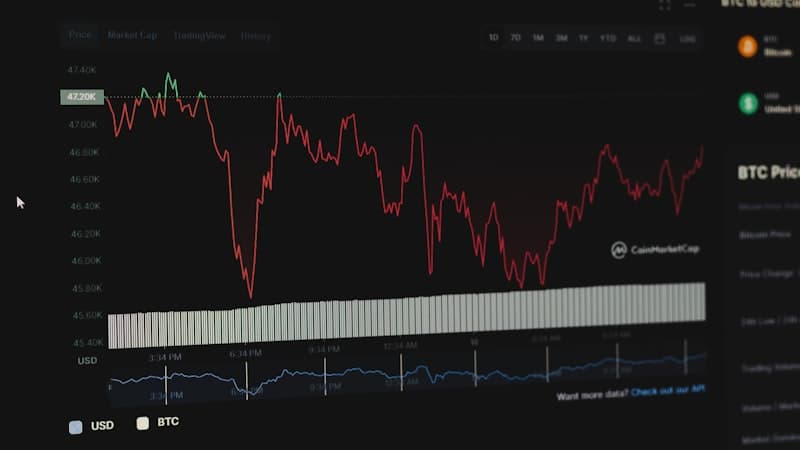
We've built trading platforms where a single calculation engine took longer to develop than the entire user interface. The screen just showed a number. But getting that number correct, in real-time, under all market conditions, was the hard part.
Number and Complexity of Integrations
Every external system your software connects to adds cost. Payment processors, CRM systems, email services, third-party APIs, legacy databases, single sign-on providers. Each integration has its own documentation (sometimes poor), authentication patterns, rate limits, and failure modes.
A project with two integrations (say, Stripe and SendGrid) is straightforward. A project that needs to sync bidirectionally with Salesforce, pull data from a legacy ERP over SOAP, and authenticate through Azure AD is a fundamentally different conversation. We typically estimate 1-3 weeks per integration, depending on the API quality.
Data Migration
If you're replacing an existing system, the data has to come with you. This sounds simple until you realize the old system has 8 years of data with inconsistent formats, duplicate records, and missing fields. Data migration can be 5-15% of total project cost. We've seen projects where it was 25%.
User Interface Expectations
There's a wide spectrum between "functional but plain" and "polished consumer-grade experience." A back-office admin tool can use a component library with minimal customization. A client-facing portal where the UI is part of your brand experience needs custom design, animations, and more QA time. We typically see a 30-40% cost difference between these two ends.
Timeline Pressure
Software can be built faster with more developers, but only up to a point. Nine women can't have a baby in one month. A compressed timeline usually increases cost by 20-30% due to coordination overhead and rework risk.
Ballpark Ranges (2025 Pricing)
Here's where we'll be as specific as we can. These are ranges based on our experience with US and international clients, using a team that blends onshore management with offshore development (which is how we operate at MindGears).
Simple web application (5-10 screens, basic CRUD operations, minimal integrations, standard auth): $15,000 - $40,000. Think: internal tool for tracking something, basic client portal, simple booking system.
Medium complexity application (15-30 screens, custom business logic, 3-5 integrations, role-based access, reporting): $40,000 - $120,000. Think: inventory management system, project management tool, customer portal with dashboards.
Complex enterprise application (30+ screens, sophisticated business logic, many integrations, real-time features, compliance requirements): $120,000 - $350,000+. Think: trading platform, multi-tenant SaaS product, healthcare management system.
Mobile app (cross-platform) using React Native or Flutter: Add roughly 60-80% of the web application cost if it's a companion app, or similar ranges to above if it's the primary product.
These numbers assume a competent team working at reasonable rates. They can go higher with US-based teams charging $150-250/hour, or lower with junior offshore teams at $15-25/hour.
Hourly vs. Fixed Price
Hourly (time and materials) works best when requirements aren't fully defined upfront or when the project will evolve based on user feedback. You pay for actual work done. The risk is that costs can exceed your initial estimate.
Fixed price works best when requirements are detailed and stable. You know the total cost upfront. The risk is that the vendor builds in a buffer to protect against scope surprises, so you might pay more than you would on hourly.
We typically start projects hourly during discovery and initial development, then move to fixed-price for well-defined feature blocks as the project matures.
Red Flags in Low-Ball Quotes
When you get quotes from multiple vendors, the range will be wide. Be careful with the lowest number. Here's what often hides behind a suspiciously cheap quote.
Bait-and-switch staffing. The experienced developers in the proposal get swapped for juniors after the contract is signed. You technically get the hours you paid for, but the output quality drops.
Missing line items. The quote covers development but not testing, deployment setup, or post-launch support. These aren't optional. They're part of the real cost of software.
Unrealistic scope interpretation. They're pricing what they think you described, not what you actually need. "User management" could be a simple login page or a full RBAC system with audit logging. If the vendor didn't ask detailed questions, they're guessing low to win the bid.
No budget for revisions. First-version software always needs adjustments once real users touch it. If the quote only covers "build and deliver" with no iteration buffer, you'll pay extra for every change.
Our honest advice: if a quote is less than half the next-lowest bid, ask very specific questions about what's included and who will do the work.
How We Approach Pricing
We'll walk you through our actual process because we think transparency builds trust.
First, we do a paid discovery phase (usually 1-2 weeks, $2,000-5,000 depending on complexity). We document requirements in detail, create wireframes, identify technical risks, and produce a detailed estimate. This costs money upfront, but the project estimate is based on real analysis, not a guess from a one-hour call.
Second, we estimate in ranges, not single numbers. Each module gets a best-case and worst-case estimate. We explain what would push it toward either end.
Third, we bill every two weeks with detailed time logs. Clients see exactly where the hours went. No surprises in the invoice.
Fourth, we flag scope changes immediately. If something comes up mid-project that wasn't in the original scope, we discuss it before building it. You decide whether it's worth adding now or saving for a later phase.
Getting Your Budget Right
Before you talk to any development team: figure out your must-haves versus nice-to-haves. The difference between a $60K project and a $120K project is often a handful of features that could wait for version 2.
Budget for post-launch too. Bug fixes, hosting, monitoring, and feature updates are ongoing. Plan for 15-20% of the initial build cost annually for maintenance.
If you've got a project in mind and want a realistic estimate, we're happy to have that conversation. No charge for an initial discussion, and we'll tell you honestly whether your budget aligns with your goals. Let's talk.